Wet-road safety is one of the most important things to understand before choosing a new set of tires. A tire can feel quiet, smooth, and comfortable on dry pavement, but rain can quickly expose weaknesses in tread depth, tread design, tire pressure, and overall wet traction.
So, what is hydroplaning? Hydroplaning happens when a layer of water builds between the tire and the road surface. When that happens, the tire can lose direct contact with the pavement, which reduces steering control, braking ability, and traction.
No tire can eliminate hydroplaning completely. However, the right tire, proper tread depth, correct air pressure, and safer driving habits can lower the risk. For tire shoppers, this is why wet traction should never be treated like a small detail.
What Is Hydroplaning When the Road Has Standing Water?
Hydroplaning is a loss of traction caused by water separating the tire from the road. Instead of the tread staying planted on the pavement, the tire begins to ride on top of water.
That can make the vehicle feel light, loose, or slow to respond. In more serious cases, steering inputs may not do much until the tires regain contact with the road.
The most common conditions that increase hydroplaning risk include standing water, higher vehicle speed, worn tread, improper tire pressure, and heavy rain that overwhelms the tire’s ability to move water away from the contact patch.
The contact patch is the small area where the tire touches the road. In wet conditions, the tire has to push water out of that area quickly enough to maintain grip. When there is too much water or not enough tread depth, that job becomes much harder.
Why Hydroplaning Matters When Choosing Tires
Hydroplaning matters because it connects directly to wet traction, wet braking, and steering control. These are not just technical review terms. They affect how confident a vehicle feels when rain starts falling, traffic slows suddenly, or water collects in low spots on the road.
When I compare tires, I pay close attention to how a tire handles wet pavement. A tire with good wet-road behavior should feel stable, predictable, and controlled in normal rainy conditions. However, even a strong wet-traction tire still depends on safe speed, proper tire maintenance, and enough remaining tread depth.
This is where tire shoppers need to be careful. A tire may advertise all-season capability, touring comfort, or long tread life, but that does not automatically mean it has top-level hydroplaning resistance. Wet-road performance depends on several things working together, including tread pattern, groove design, rubber compound, and tread depth.
Why “What Is Hydroplaning” Matters When Reading Tire Reviews
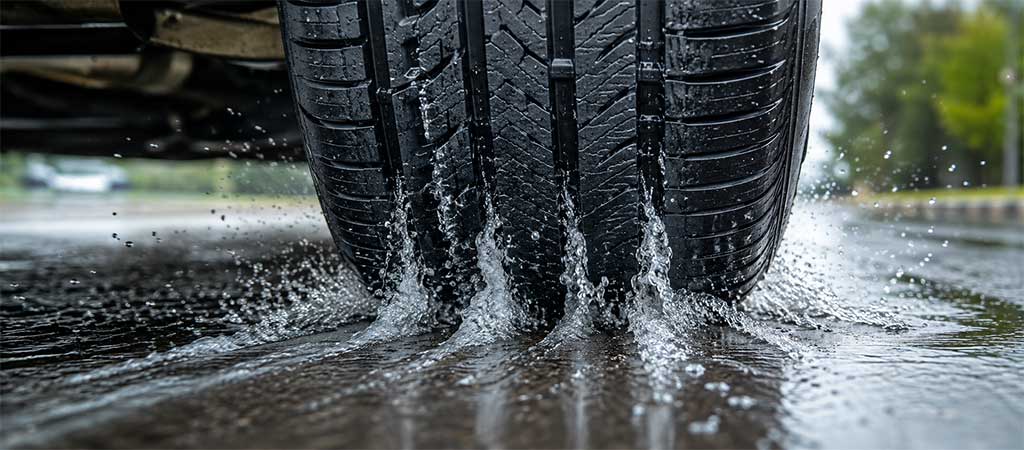
When a tire review mentions hydroplaning resistance, it is usually talking about how well the tire manages water under the tread. Wider circumferential grooves, lateral channels, siping, and tread block design can all influence how efficiently water moves away from the contact patch.
However, shoppers should avoid judging a tire by one tread feature alone. A tire with aggressive-looking grooves is not automatically better in rain. The overall design, compound, construction, and condition of the tire all matter.
This is why wet traction ratings should be read alongside other categories. Look at wet braking, cornering stability, steering response, treadwear, and comfort together. A tire that handles rain well but wears quickly may not be the right fit for every driver. On the other hand, a long-lasting tire with weak wet grip may not be the best choice for areas with frequent rain.
How Tread Depth Changes Wet-Road Safety
Tread depth is one of the biggest real-world factors in hydroplaning risk. Deeper tread grooves give water more space to escape. As the tread wears down, there is less room for water to move through the pattern, especially during heavier rain or at highway speeds.
Many drivers wait until a tire is near the legal minimum before replacing it. That may satisfy a basic legal requirement, but wet-road performance can decline before a tire reaches that point. For someone who drives in frequent rain, shallow tread should be taken seriously.
This is also why I do not like judging a tire only by how it performs when new. A good tire should remain predictable as it wears, but every tire loses tread depth over time. Regular inspections help you see when wet traction may no longer be where you need it to be.
Tire Pressure Also Plays a Role
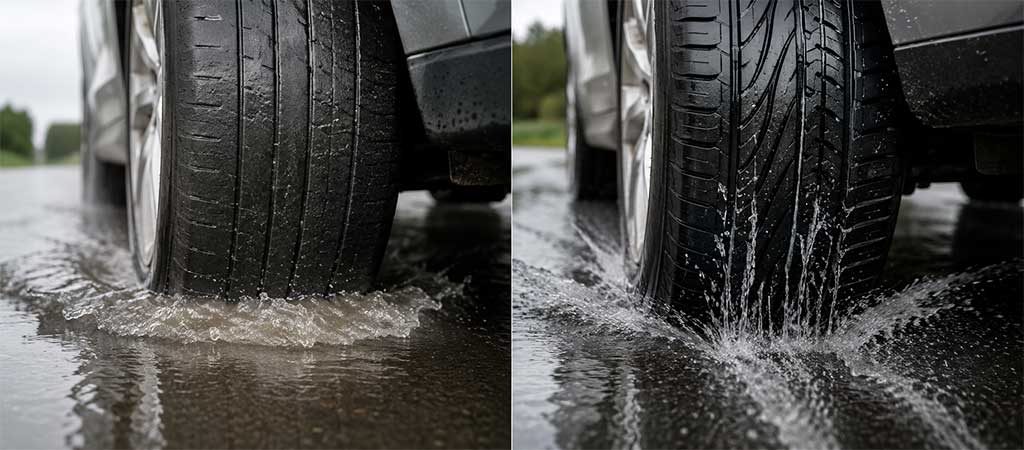
Proper tire pressure helps the tread maintain the correct shape against the road. When a tire is underinflated or overinflated, the contact patch can change, and that can affect traction, wear, handling, and braking.
For hydroplaning, underinflation is especially important to avoid. A tire that is not properly inflated may not cut through water as effectively. It can also build heat, wear unevenly, and reduce overall driving stability.
The correct pressure is not found on the tire sidewall as the normal operating recommendation. Use the vehicle manufacturer’s recommended tire pressure, usually found on the driver-side door placard or in the owner’s manual. Check pressure when the tires are cold, and do it regularly instead of waiting for a warning light.
Speed Can Overpower Even a Good Tire
A strong wet-traction tire can help, but speed still matters. The faster a vehicle travels through standing water, the less time the tread has to channel water away. Heavy rain, deep puddles, and worn pavement can make that problem worse.
This is why hydroplaning often becomes more likely on highways, freeway ramps, and roads where water collects in ruts or low areas. Even if the tire is in good condition, driving too fast for the amount of water on the road can reduce control.
A normal driver should slow down before reaching large puddles, avoid sudden steering movements, and keep more distance from the vehicle ahead. Wet roads already increase stopping distance, and hydroplaning can make a quick stop even harder.
Common Misunderstandings About Hydroplaning
One common misunderstanding is that hydroplaning only happens in deep water. Deep standing water is a serious concern, but hydroplaning can also happen when enough water builds up under the tire at speed.
Another misunderstanding is that new tires make hydroplaning impossible. Newer tires with healthy tread can reduce the risk, but they cannot overcome unsafe speed, poor road drainage, incorrect tire pressure, or severe weather.
Some drivers also assume that heavier vehicles are always safer in rain. Vehicle weight, tire size, tread design, road surface, speed, and water depth all interact. A heavier SUV or truck still needs proper tires, correct air pressure, and cautious driving in wet conditions.
It is also important not to confuse hydroplaning resistance with overall wet performance. Hydroplaning resistance is mainly about moving water away from the tire. Wet braking and wet cornering also depend on rubber compound, tread design, tire condition, and how the vehicle is being driven.
What Tire Shoppers Should Look For
When shopping for tires, look for wet-road information that goes beyond vague claims. Pay attention to review sections that discuss wet traction, wet braking, standing-water confidence, highway stability in rain, and steering feel on wet pavement.
For drivers in rainy climates, wet traction may be more important than slightly sharper dry handling or a sportier road feel. For commuters who spend time on highways, hydroplaning resistance should be part of the buying decision because water buildup at speed can feel very different from light rain around town.
Treadwear also deserves attention. A tire that starts with good wet traction still needs enough remaining tread to keep performing well. If you drive a lot of miles, a tire’s long-term wet-road behavior can be just as important as its new-tire performance.
How Hydroplaning Connects to Tire Type
Different tire categories can handle wet roads differently. A grand touring all-season tire may focus on comfort, tread life, and balanced wet grip. A performance tire may deliver sharper dry and wet handling but may wear faster depending on the model and driving style. An all-weather tire may add stronger cold-weather versatility, but it still does not make wet-road caution optional.
The main point is to match the tire to the way you actually drive. If you live where heavy rain is common, a tire with strong wet traction and stable highway manners should move higher on your priority list. If your roads are mostly dry, wet performance still matters, but you may weigh comfort, treadwear, and road noise more heavily.
Hydroplaning is not only a “rainy state” problem. Sudden storms, freeway puddles, worn pavement, and poor drainage can create wet-road risk almost anywhere.
A Practical Hydroplaning Checklist for Tire Buyers
Before choosing your next set of tires, use this quick checklist:
Look for strong wet traction, not just all-season labeling.
Check tread depth regularly, especially before rainy seasons or long trips.
Keep tire pressure at the vehicle’s recommended setting for better contact with the road.
Replace worn tires before wet grip becomes a problem, especially if you drive often in rain.
Slow down around standing water, even if your tires are newer.
Compare wet braking and hydroplaning resistance together, because both affect real-world safety.
Choose tires that fit your driving conditions, not just the lowest price or longest mileage claim.
Final Takeaway on Hydroplaning and Tire Buying
Hydroplaning is one of those tire safety topics that sounds simple until you connect it to real driving. It is not only about rain. It is about how speed, tread depth, tire pressure, tread design, road surface, and water depth all come together in the moment.
For tire buyers, the lesson is straightforward: do not treat wet traction as an afterthought. A good tire should help the vehicle feel controlled and predictable when the road gets wet, but that performance still depends on maintenance and smart driving.
Understanding hydroplaning helps you read tire reviews with a sharper eye. You can look past broad marketing language and focus on the details that matter most: wet grip, water evacuation, tread depth, braking control, and real-world rainy-road confidence.