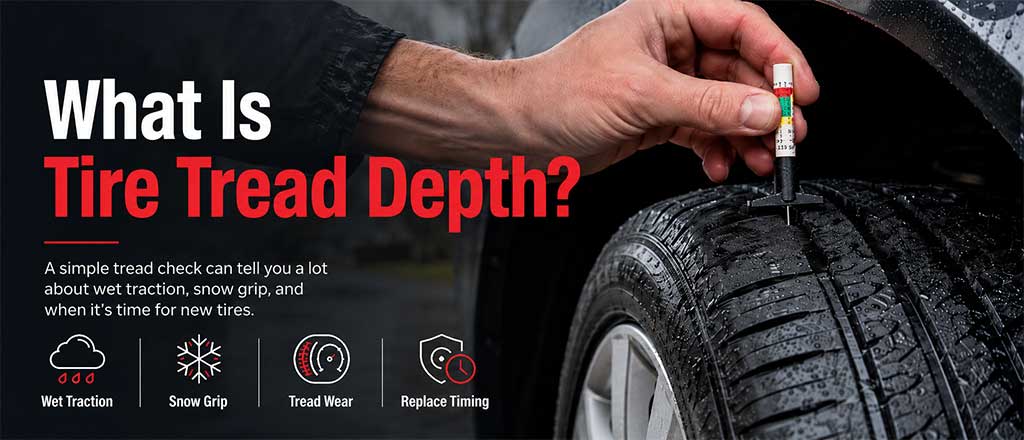
Tread depth is one of the easiest tire details to overlook, but it can have a major effect on how a vehicle feels in rain, light snow, slush, and everyday road conditions. A tire may look fine from a distance, yet the remaining tread can tell a much different story.
So, what is tire tread depth? Tire tread depth is the measurement of how much usable tread remains between the top of the tread blocks and the bottom of the main grooves. In the United States, it is commonly measured in 32nds of an inch.
For tire shoppers, tread depth matters because it affects wet traction, snow traction, hydroplaning resistance, braking confidence, steering control, and how long a tire can keep performing safely. It is not just a number on a spec sheet. It is one of the main clues that tells you how much real-world grip a tire still has left.
What Is Tire Tread Depth in Real Tire Shopping Terms?
Tire tread depth tells you how deep the grooves are on the tire. Those grooves help move water, slush, and light snow away from the contact patch so the tire can stay connected to the road.
The contact patch is the small area where the tire touches the pavement. When the tread has enough depth, the grooves have more room to channel water and loose material away. As the tire wears down, those grooves become shallower, which can reduce wet-road control and snow traction.
Most new passenger tires start with more tread than the legal minimum, although the exact starting depth depends on the tire type and model. Touring tires, performance tires, winter tires, all-terrain tires, and all-weather tires can all have different tread depths because they are designed for different priorities.
The important point is simple: more usable tread generally gives the tire more room to manage water and light snow, but tread depth is only one part of performance. Rubber compound, tread pattern, siping, tire pressure, alignment, vehicle weight, and driving speed also matter.
Why Tread Depth Matters More in Rain
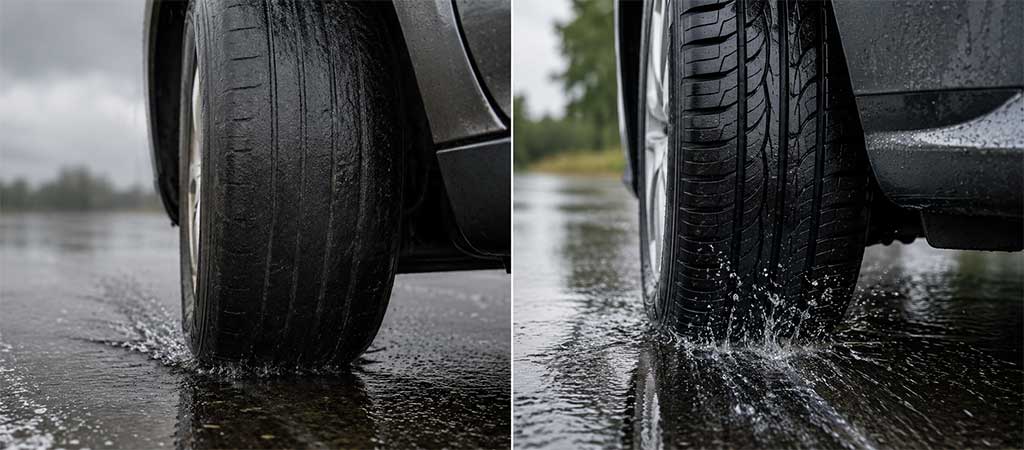
Rain is where tread depth becomes especially important. When a tire rolls across a wet road, it has to move water away fast enough to keep rubber in contact with pavement. If the grooves are too shallow, water can build under the tire and reduce grip.
This can lead to longer stopping distances, weaker steering response, and a higher risk of hydroplaning. Hydroplaning happens when water separates the tire from the road surface. No tire can prevent it completely, but healthy tread depth can help reduce the risk when paired with proper tire pressure and safer driving speeds.
A tire with low tread may still feel acceptable on dry roads, which is one reason drivers sometimes wait too long to replace worn tires. Dry pavement can hide the problem. Rain exposes it quickly.
For a normal driver, the warning signs may feel like vague steering, extra movement over puddles, reduced braking confidence, or the vehicle feeling unsettled during heavy rain. Those signs should never be ignored.
Why Tire Tread Depth Changes Snow Traction
Snow traction depends on more than tread depth, but tread depth plays a major role. Snow, slush, and packed winter road buildup need space to move through the tread pattern. As the tread wears down, the tire has less ability to bite into loose snow or clear slush from the contact area.
This is especially important for drivers using all-season or all-weather tires in occasional winter conditions. A tire may have a strong snow rating when new, but worn tread can reduce its winter usefulness over time.
Winter tires and all-weather tires with the proper snow rating can help in cold-weather conditions, but they still need enough tread depth to work properly. A worn snow-rated tire should not be treated like a fresh one.
For severe winter driving, dedicated winter tires remain the better choice when conditions demand them. All-weather tires can be useful for drivers who face mixed weather, but they do not remove the need for caution on ice, deep snow, steep hills, or poorly plowed roads.
Why What Is Tire Tread Depth Matters in Tire Reviews
When you read tire reviews, tread depth helps explain why a tire may perform differently when new compared with later in its life. A review may discuss wet braking, hydroplaning resistance, snow grip, or treadwear, but those categories are connected.
A tire with excellent wet traction when new may lose some of that advantage as the tread wears. One with a long treadwear warranty may still need regular checks to make sure it has enough remaining depth for the way you drive. A tire with good light-snow performance can become less useful in winter once the tread gets too shallow.
This is why I like looking at tire performance as a full ownership picture. Initial grip is important, but so is how the tire is expected to hold up over time. A tire shopper should look at wet traction, snow traction, treadwear, road comfort, and replacement timing together instead of focusing on one number.
The Legal Minimum Is Not Always the Best Safety Target
Many passenger tires are considered worn out at 2/32 of an inch. At that point, the treadwear indicators are usually flush with the tread surface, and the tire should be replaced.
However, the legal minimum should not be treated as the ideal replacement point for every driver. If you regularly drive in rain, mountain roads, colder weather, or light snow, waiting until 2/32 may leave you with less traction than you want.
For wet conditions, many safety-minded drivers start paying closer attention around 4/32 of an inch. For snow or slush, caution often starts earlier because winter traction can drop as the tire loses groove depth and biting edges.
The best replacement timing depends on your climate, driving habits, vehicle type, and tire category. A driver in a dry climate may have different needs than someone who drives through frequent storms. The key is to check tread depth before traction becomes a problem, not after.
How to Check Tire Tread Depth
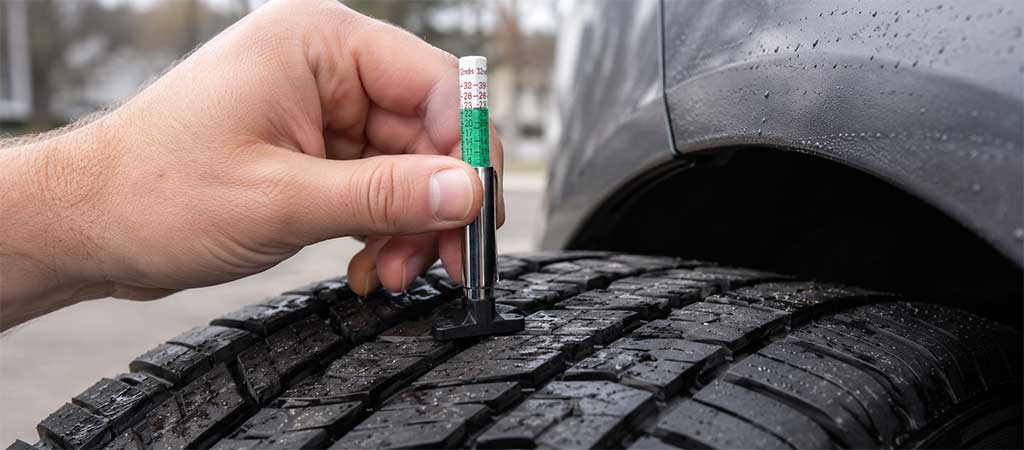
The most accurate way to check tread depth is with a tread depth gauge. It is inexpensive, easy to use, and gives a clearer reading than guessing by sight.
Place the gauge into the main tread grooves and check several spots across the tire. Do not measure only one groove or one tire. Tread can wear unevenly across the inner shoulder, center, or outer shoulder.
You can also look for treadwear indicator bars inside the grooves. These raised bars become level with the tread surface when the tire reaches the replacement point. If the tread is even with those bars, the tire is done.
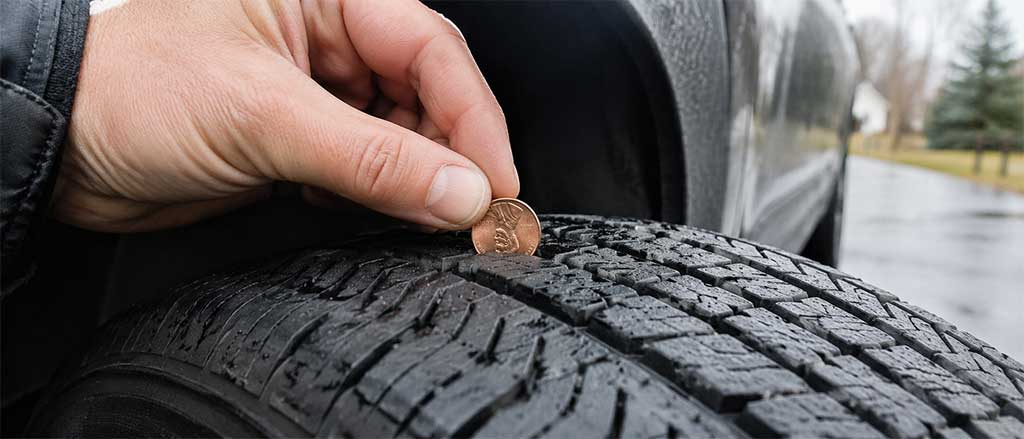
The penny test can also give a quick basic warning, but it should not replace regular measurement with a gauge. A gauge gives you a better number, especially when deciding whether your tires still have enough tread for rainy or snowy driving.
Uneven Wear Can Be Just as Important as Low Tread
Tread depth is not only about how much tread is left. It is also about how evenly the tire is wearing.
If the center wears faster than the shoulders, tire pressure may be part of the issue. Faster wear on one shoulder can point to alignment or suspension problems. Cupping or patchy tread wear may also lead to more road noise and ride vibration.
Uneven wear can reduce performance even if part of the tire still has acceptable tread depth. That is why tire rotation, proper inflation, and alignment checks matter. They help the tire maintain better contact with the road and can improve long-term value.
For tire shoppers, this also matters when comparing reviews. A tire with good treadwear ratings can still wear poorly if the vehicle has alignment issues, worn suspension parts, incorrect pressure, or skipped rotations.
What Normal Drivers Should Pay Attention To
A normal driver does not need to become a tire engineer to understand tread depth. A few practical habits can make a big difference.
Check tread depth at least once a month or before long trips. Look across the full width of the tire, not just the easy-to-see outer edge. Pay extra attention before rainy seasons, winter trips, or any long highway drive.
Also watch how the vehicle feels. If wet-road braking seems longer than before, if the vehicle feels nervous over puddles, or if traction feels weaker in light snow, the tires may need closer inspection.
Tread depth should also be checked when rotating tires. Rotation gives you a good chance to compare front and rear wear. Front tires often wear differently from rear tires depending on drivetrain layout, vehicle weight, steering load, and alignment condition.
Common Misunderstandings About Tread Depth
One misunderstanding is that a tire is safe in all conditions until it reaches the legal minimum. That is not always a smart way to think about wet or snowy roads. A tire can lose meaningful wet or snow performance before it is legally worn out.
Another misunderstanding is that tread depth alone tells the whole story. It does not. A tire with plenty of tread but poor wet traction may not be the best choice for rainy driving. A tire with healthy tread but the wrong category for winter weather may still struggle in snow.
Some drivers also assume all tires wear evenly. They do not. Tire pressure, alignment, rotation habits, vehicle load, road surfaces, and driving style can all change wear patterns.
The last misunderstanding is that tread depth is only about safety. It also connects to value. A tire that wears evenly and keeps useful traction longer can be easier to live with over its full ownership life.
How Tread Depth Helps You Compare Tires Smarter
When comparing tires, tread depth should help you ask better questions. How does the tire perform in the rain? Its light snow traction also matters for drivers who face occasional winter weather, while treadwear reputation helps show how well it may hold up over time. Does it have a tread pattern that supports water evacuation? Is the tire category right for your climate?
A driver who mostly faces dry roads may place more weight on comfort, road noise, steering feel, and tread life. In a rainy climate, wet braking and hydroplaning resistance deserve more attention. For light snow, remaining tread depth becomes more important before winter begins.
This helps you avoid choosing a tire only because it has a long mileage warranty or a low price. Those things matter, but they should not outweigh traction needs in the conditions you actually face.
Quick Buyer Takeaway for Tire Tread Depth
Before buying or replacing tires, keep these points in mind:
Tread depth affects wet traction, especially braking and hydroplaning resistance.
Snow traction can decline as tread wears, even on tires that performed well when new.
2/32 of an inch is the replacement point, but wet and winter driving may require earlier action.
A tread depth gauge gives the clearest reading and is better than guessing by appearance.
Uneven wear can reduce performance even when one section of the tire still looks usable.
Proper tire pressure, rotation, and alignment help protect tread life and keep the tire working as intended.
Tire category matters, so match the tire to your weather, vehicle type, and driving routine.
Final Takeaway on Tire Tread Depth
Tread depth is one of the clearest signs of how much usable tire performance remains. It affects how well a tire can manage water, handle light snow, maintain braking confidence, and keep the vehicle feeling controlled in changing weather.
For tire buyers, understanding tread depth makes reviews easier to read and comparisons more useful. You can look beyond basic claims and focus on the parts of tire performance that affect real driving: wet grip, snow traction, hydroplaning resistance, treadwear, and replacement timing.
A tire does not need to be completely worn out before it becomes less confidence-inspiring in rain or snow. Checking tread depth regularly helps you replace tires at the right time, choose smarter, and avoid waiting until the tread is already working against you.