
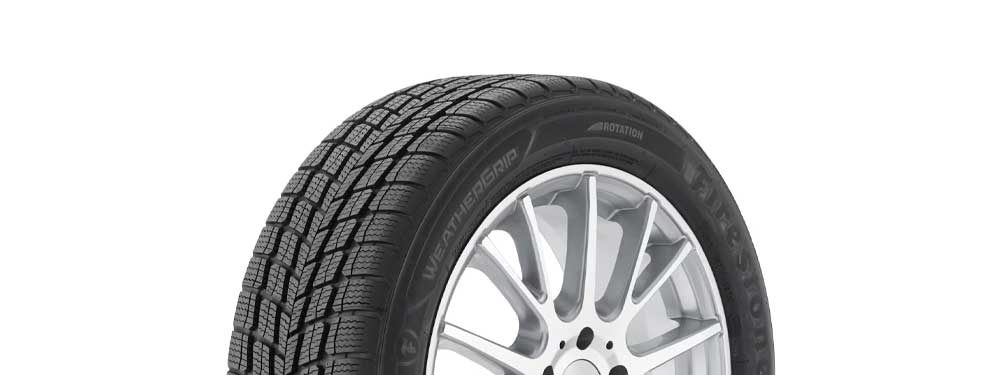
The Firestone WeatherGrip is one of those tires that makes the most sense when your weather changes often, but you still want a comfortable tire for normal road use. I reviewed this tire as a Grand Touring All-Season option for drivers who want stronger rain and snow confidence without giving up the easy ride expected from a touring tire.
This Firestone WeatherGrip review focuses on how it performs in the areas that matter most for everyday ownership: wet traction, dry grip, light snow control, comfort, road noise, treadwear, warranty coverage, and overall value. Based on the ratings provided, the WeatherGrip is a well-rounded tire with a clear advantage in poor-weather confidence.
It is best suited for drivers of sedans, coupes, crossovers, wagons, and minivans who deal with rain, cold roads, slush, or occasional snow. It is not a rugged tire, and it is not meant for aggressive driving. Its real value comes from giving normal vehicles a more confident year-round feel.
Firestone WeatherGrip Review: Where This Tire Fits Best
The WeatherGrip belongs in the Grand Touring All-Season category, but it leans more toward all-weather confidence than a basic touring tire. That matters because some all-season tires are mainly designed for dry and wet roads, with only modest help in winter conditions. The WeatherGrip goes further by giving drivers better support in cold, wet, and snowy conditions.
Its strongest areas are dry traction, wet traction, winter/snow traction, and treadwear balance. That combination makes it a useful choice for drivers who do not want to swap tires every winter, but still need more than basic all-season capability.
The driving feel should be stable and controlled rather than sporty. I would expect the WeatherGrip to feel secure in rain, composed on dry pavement, and more reassuring in light snow than many comfort-first touring tires.
Wet Roads, Standing Water, and Rain Control
Wet traction is one of the WeatherGrip’s strongest qualities. With a wet traction rating of 8.8/10, this tire gives drivers a high level of confidence in rain, wet intersections, and highway spray.
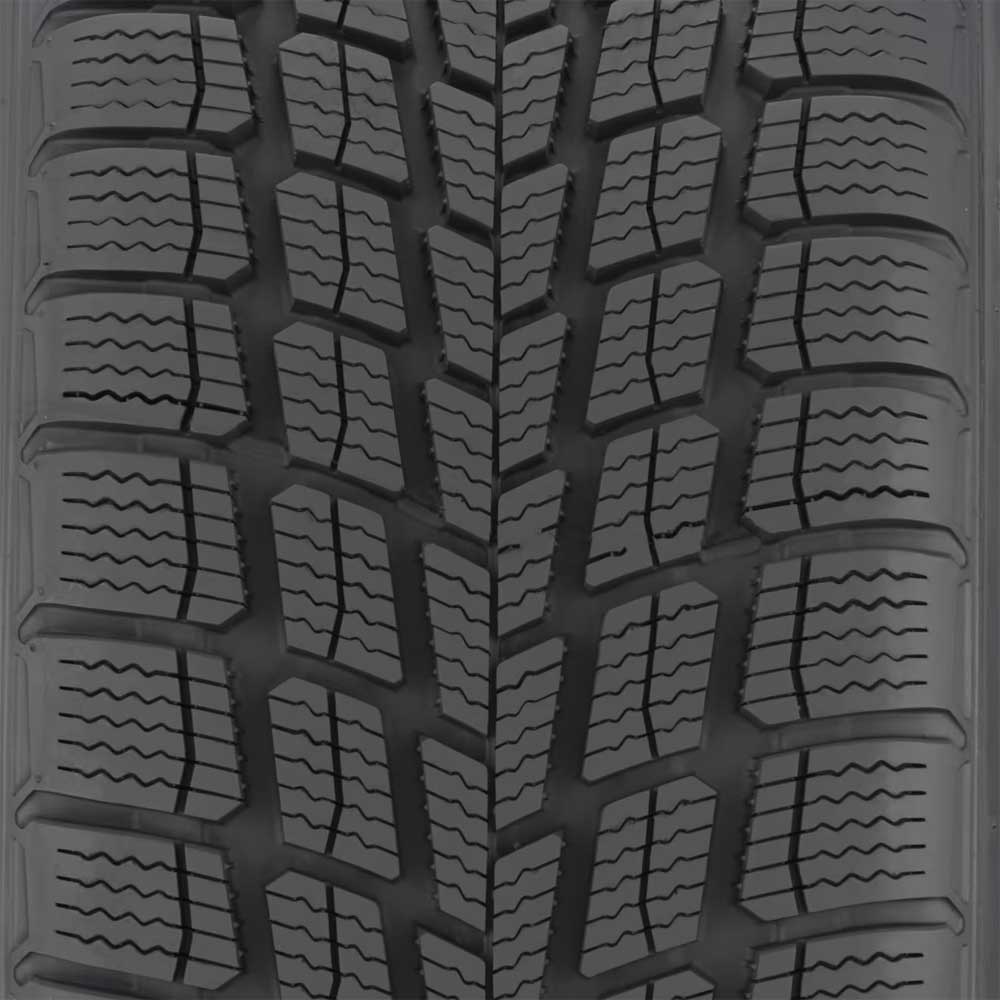
The tread design is made to move water away from the contact patch. Full-depth grooves, open shoulder areas, and a traction-focused pattern all help reduce the chance of hydroplaning when roads are soaked. That does not mean drivers should push hard in heavy rain, but it does mean the tire has the right design priorities for wet-weather driving.
In normal conditions, I would expect the WeatherGrip to feel predictable when braking, changing lanes, or driving through water-covered sections of road. That kind of predictability is important because rain performance is not only about grip. It is also about how calmly the tire responds when the road surface changes.
Dry Traction and Everyday Road Stability
The WeatherGrip earns a dry traction rating of 9.0/10, which is excellent for this type of tire. On dry roads, it should feel steady, planted, and easy to trust during normal driving.
This is not the tire I would choose for a sporty, sharp steering feel. However, that is not its purpose. Its job is to give drivers stable braking, confident cornering, and a controlled ride during daily use. In that role, the dry traction score is very strong.
The WeatherGrip should work well for drivers who spend time on freeways, surface streets, and suburban roads. It should also feel stable during longer trips, especially when the vehicle is loaded with passengers or cargo. That makes it a practical fit for families, commuters, and drivers who want road manners that feel secure without feeling harsh.
Winter and Snow Traction Are a Real Advantage
Winter performance is where the WeatherGrip separates itself from many traditional touring tires. It receives a winter/snow traction rating of 8.3/10, which is strong for a Grand Touring All-Season tire.
This rating makes the WeatherGrip a good option for drivers who see light to moderate snow, slush, cold rain, and changing winter conditions. The tread uses extra biting edges and snow-focused features to help the tire grab when the road is covered. That can make a noticeable difference when pulling away from a stop, turning through slush, or driving on cold pavement.
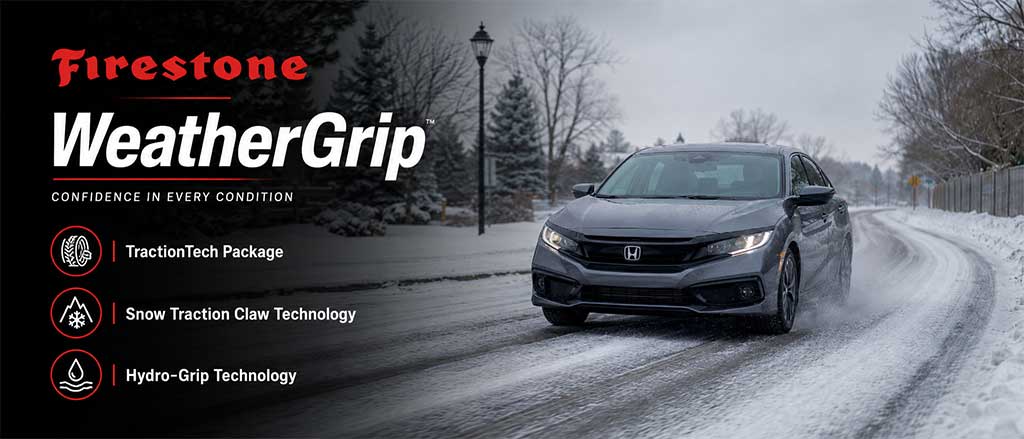
Suggested Image Caption: A sedan or crossover driving through light snow on a plowed road, helping readers see the type of winter condition where the Firestone WeatherGrip is most useful.
The WeatherGrip is still not the same as a dedicated winter tire. Drivers who deal with deep snow, heavy ice, mountain roads, or long winter seasons should consider a true winter tire. However, for areas where winter is present but not extreme, the WeatherGrip gives a useful safety margin over many basic all-season options.
Comfort and Road Noise on Longer Drives
The WeatherGrip earns a comfort and road noise rating of 8.4/10, which is solid for a tire with stronger weather capability. This matters because some tires that focus heavily on snow and rain traction can feel louder or firmer on dry roads.
The WeatherGrip keeps a reasonable touring feel. It should absorb normal road imperfections well, and it should not make the vehicle feel rough during daily driving. Road noise may be slightly more noticeable than the quietest premium touring tires, especially as the tread wears, but the comfort score still points to a tire that works well for commuting and highway travel.
I would describe the ride as practical and balanced. It gives up a little refinement compared with some comfort-first touring tires, but it pays that back with better winter and wet-weather confidence. For many drivers, that trade-off is worth it.
Treadwear, Warranty, and Ownership Value
The WeatherGrip receives a treadwear rating of 8.0/10, which is a strong score for a tire with this much weather capability. Firestone also backs it with a 65,000-mile limited mileage warranty, which gives it solid long-term value in the Grand Touring All-Season category.
Tread life always depends on driving habits, rotation schedule, alignment, tire pressure, road conditions, and vehicle weight. A driver who rotates the tires regularly and keeps the vehicle properly aligned should get much better results than someone who ignores maintenance.
The treadwear rating helps the WeatherGrip feel like more than a seasonal compromise. It is not just a tire for rain and snow. It also offers a practical ownership case for drivers who want one set of tires to cover commuting, errands, highway use, and changing weather.
Firestone WeatherGrip Review Rating Breakdown
The Firestone WeatherGrip earns an overall rating of 8.5/10, which is a strong result for a Grand Touring All-Season tire with all-weather capability. Its best numbers come from dry traction, wet traction, and winter/snow performance.
| Category | Rating |
|---|---|
| Wet Traction | 8.8/10 |
| Dry Traction | 9.0/10 |
| Winter/Snow Traction | 8.3/10 |
| Comfort and Road Noise | 8.4/10 |
| Treadwear | 8.0/10 |
| Overall Rating | 8.5/10 |
The rating spread shows a tire with very few weak points. Dry grip is the highest score, which means the tire does not sacrifice normal road confidence just to improve poor-weather performance. Wet traction is also excellent, and the winter/snow rating is one of the main reasons to consider this tire.
Comfort is slightly lower than the traction scores, but it is still good. That makes sense for a tire designed to handle more weather variety. Overall, the WeatherGrip is a smart choice when traction confidence matters just as much as ride quality.
How the WeatherGrip Compares With Similar Grand Touring All-Season Tires
The Falken Aklimate, General AltiMAX RT45, and Continental ProContact TX are all valid same-category comparisons because they are Grand Touring All-Season tires. However, they do not all aim at the exact same type of buyer.
| Tire | Category | Best Strength | Possible Drawback | Best For |
|---|---|---|---|---|
| Firestone WeatherGrip | Grand Touring All-Season | Strong wet and snow confidence | May not be as quiet as comfort-first touring tires | Drivers who want one tire for rain, cold, and light snow |
| Falken Aklimate | Grand Touring All-Season | Severe-weather confidence and year-round traction | Newer option with less long-term history than older competitors | Drivers who want all-weather capability with touring comfort |
| General AltiMAX RT45 | Grand Touring All-Season | Treadwear value and balanced everyday performance | Snow traction is not as weather-focused as the WeatherGrip | Drivers who value mileage, comfort, and practical pricing |
| Continental ProContact TX | Grand Touring All-Season | Smooth ride, low road noise, and balanced wet/dry control | Winter ability is more limited than weather-focused options | Drivers who want a refined touring tire for normal conditions |
WeatherGrip againts Similar Grand Touring Tires in its category
The WeatherGrip is the better fit if winter traction and rain control are high priorities. It feels more weather-focused than the General AltiMAX RT45 and Continental ProContact TX, while still keeping enough comfort for everyday use.
The Falken Aklimate is probably the closest comparison for drivers who want stronger all-weather confidence. Both tires appeal to people who deal with changing seasons and want one set of tires instead of switching to winter tires. The WeatherGrip has the advantage of being a more established name in this space, while the Aklimate brings a newer all-weather approach.
The General AltiMAX RT45 is more of a practical touring value choice. It is a strong option for drivers who care about mileage, normal road comfort, and predictable all-season use. However, if snow and slush matter more, the WeatherGrip has the stronger winter-focused profile.
The Continental ProContact TX is more refined and comfort-oriented. It is a good match for drivers who want a smooth, quiet, balanced touring tire and mostly drive in mild conditions. The WeatherGrip is the stronger pick when the road regularly includes cold rain, slush, or light snow.
Best Vehicle Types and Driving Situations
The Firestone WeatherGrip works well for sedans, coupes, crossovers, wagons, and minivans that are used on paved roads in changing weather. It is especially useful for drivers who want stronger wet and winter traction without moving into a dedicated winter tire.
It fits these driving situations well:
Commuting in rain and cold weather
Highway driving in changing seasons
Light to moderate snow on plowed roads
Family driving where predictability matters
Year-round use in areas with mild to moderate winters
Drivers who want practical treadwear and warranty coverage
It is not the right tire for off-road use, deep snow, frequent ice, or performance driving. It is also not the quietest possible touring tire. The WeatherGrip is strongest when the goal is balanced year-round control with extra help in poor weather.
Firestone WeatherGrip Sizes and Fitment Options
The Firestone WeatherGrip is aimed at everyday drivers who want more year-round traction than a basic all-season tire, especially in rain, cold weather, and occasional snow. Use the options below to compare available WeatherGrip sizes, price ranges, and fitment details before deciding which version matches your vehicle.
Use the **Keyword Search** field to search by tire size and speed rating. You can enter a full size like 275/40ZR20, or search by part of the size, such as 275, 40, ZR, R20, or 20. This helps narrow the results when you are looking for tires by specific size and speed rating details.
40 tires found
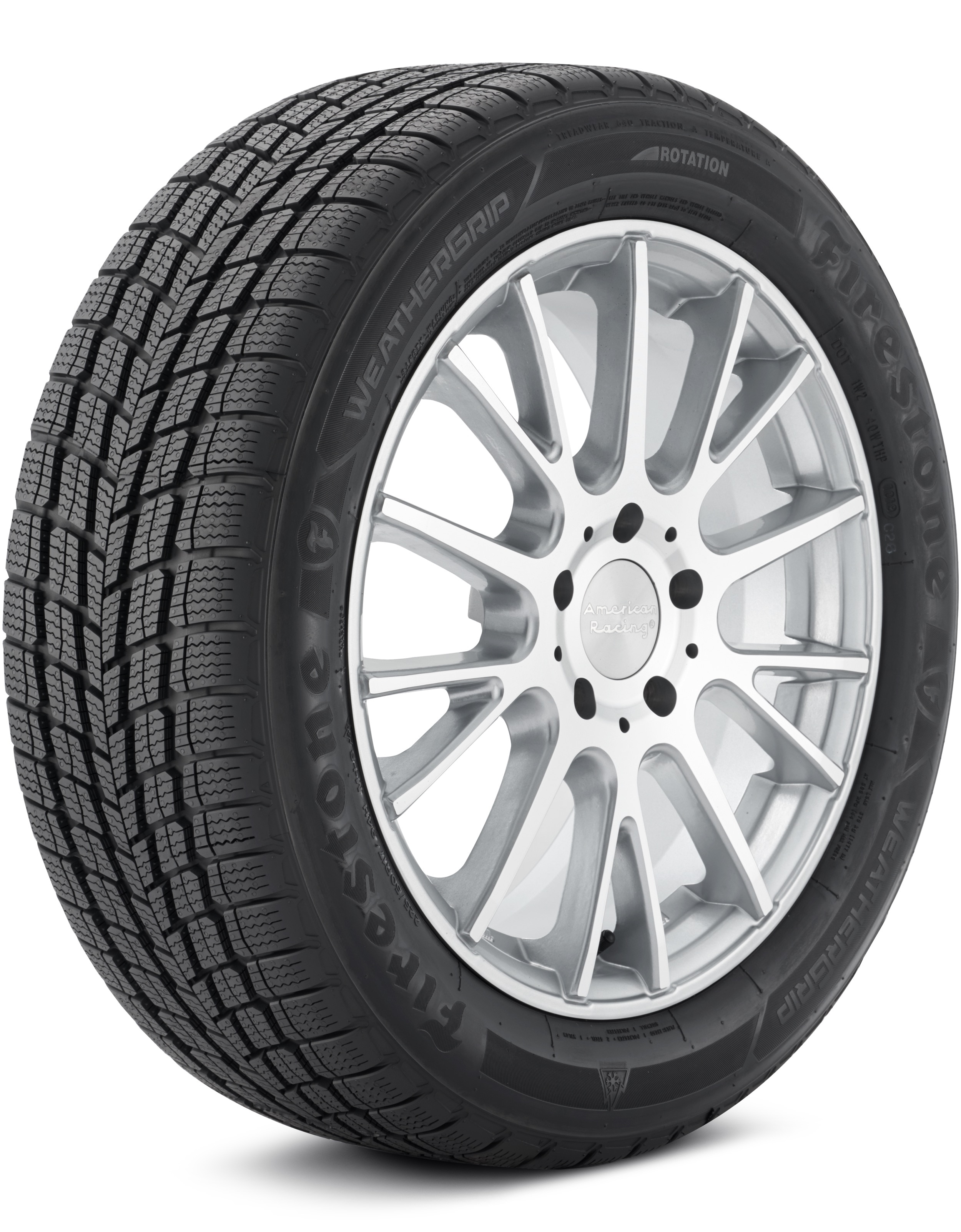
Firestone WeatherGrip 225/45R17 91V Grand Touring All-Season Tire 011553
View Tire Details
Firestone WeatherGrip 245/45R18 96V Grand Touring All-Season Tire 011558
View Tire Details
Firestone WeatherGrip 235/55R19 101H Grand Touring All-Season Tire 009168
View Tire Details
Firestone WeatherGrip 235/40R19 XL 96V Grand Touring All-Season Tire 011562
View Tire Details
Firestone WeatherGrip 215/45R17 XL 91V Grand Touring All-Season Tire 011541
View Tire Details
Firestone WeatherGrip 215/65R16 98H Grand Touring All-Season Tire 004421
View Tire Details
Firestone WeatherGrip 215/45R17 XL 91V Grand Touring All-Season Tire 011541 OLD
View Tire Details
Firestone WeatherGrip 215/50R17 XL 95V Grand Touring All-Season Tire 011538
View Tire DetailsWho Should Consider the Firestone WeatherGrip?
The WeatherGrip deserves strong consideration if you want one set of tires that can handle dry roads, heavy rain, cold pavement, slush, and occasional snow. It is a practical tire for drivers who do not want to think about changing tires every season, but still want more winter confidence than a basic all-season tire provides.
It is also a good fit if you value predictable braking, stable road feel, and better traction in poor weather. The overall rating of 8.5/10 shows that it performs well across the board without leaning too hard in only one direction.
For drivers who live where the weather changes quickly, the WeatherGrip is one of the more practical choices in the Grand Touring All-Season category.
Who May Prefer a Different Tire?
Some drivers may be happier with another option. If you want the quietest and most refined touring ride, the Continental ProContact TX may be a better match. It focuses more on comfort, smoothness, and everyday road manners.
If long tread life and value are your biggest priorities, the General AltiMAX RT45 may be worth considering. It is a strong practical tire for drivers who want a dependable touring tire without needing the WeatherGrip’s stronger snow emphasis.
If you want another severe-weather-focused option in the same category, the Falken Aklimate belongs on the list. It is designed for drivers who want year-round confidence with more winter capability than a standard all-season tire.
The WeatherGrip is strongest for drivers who place wet and winter confidence near the top of their list. If your driving is mostly dry, warm, and highway-based, you may not need everything this tire offers.
Final Verdict on the Firestone WeatherGrip
The Firestone WeatherGrip is a strong Grand Touring All-Season tire for drivers who want real wet traction, useful winter grip, stable dry-road control, and solid treadwear in one tire. Its 8.5/10 overall rating reflects a tire that handles everyday driving well while giving extra confidence when the weather gets messy.
Its best qualities are easy to understand. It grips well in the rain, handles dry roads with confidence, performs better in light snow than many traditional all-season tires, and still keeps a comfortable enough ride for commuting and family use.
The WeatherGrip is not the quietest or sportiest tire in the category. However, it gives shoppers a very practical mix of traction, comfort, mileage, and year-round usability. For drivers who face rain, cold roads, slush, and occasional snow, this tire is easy to recommend.